
Introduction
Environmental, Social, and Governance (ESG) considerations are becoming an important part of responsible business management. Organisations are increasingly expected to understand their environmental impacts, protect employee well-being, maintain ethical business practices, and demonstrate transparency in their operations.
However, managing ESG priorities without a clear structure can be challenging. Businesses may collect sustainability data without knowing how to use it, introduce policies without assigning responsibility, or set targets that are difficult to measure. These challenges can limit progress and make it harder to demonstrate meaningful results.
A practical ESG framework helps organisations turn sustainability commitments into structured business actions. It establishes priorities, defines responsibilities, identifies risks, sets measurable objectives, and creates processes for monitoring and improving performance.
An effective framework does not have to be complicated. Organisations can build on existing management systems, risk assessment procedures, compliance processes, and performance reviews. The key is to develop an approach that reflects the organisation’s size, industry, operations, stakeholder expectations, and applicable requirements.
For example, a manufacturing company may prioritise energy consumption, water use, workplace safety, and responsible sourcing. A professional services firm may focus more on employee well-being, business ethics, data security, and energy use in its offices.
In this blog, we explore how to build a practical ESG framework, identify material issues, establish KPIs, assign responsibilities, overcome common challenges, and use real-world examples to support implementation.
What Is an ESG Framework?
An ESG framework is a structured approach that helps an organisation identify, manage, monitor, and report on its environmental, social, and governance priorities.
It connects ESG objectives with business strategy, risk management, operational processes, stakeholder engagement, and performance measurement.
A practical ESG framework typically includes the following elements:
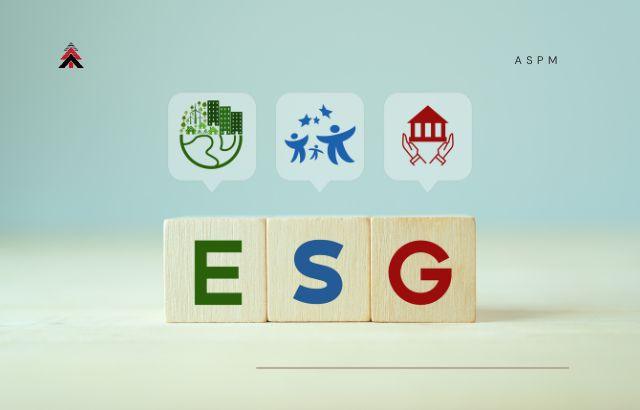
- Environmental management: Addressing climate-related risks, greenhouse gas emissions, energy consumption, water use, waste, pollution, and resource efficiency.
- Social responsibility: Managing workplace health and safety, employee well-being, labour practices, human rights, inclusion, and community impacts.
- Governance: Strengthening business ethics, accountability, transparency, compliance, internal controls, and responsible decision-making.
- Materiality assessment: Identifying the ESG issues that are most significant to the organisation and its stakeholders.
- Risk management: Assessing ESG-related risks, opportunities, impacts, and dependencies.
- Objectives and KPIs: Establishing measurable targets and indicators to track progress.
- Roles and responsibilities: Assigning ownership for ESG initiatives and performance monitoring.
- Reporting and improvement: Reviewing results, communicating progress, and addressing performance gaps.
The purpose of an ESG framework is to make sustainability a practical part of business management rather than treating it as a separate reporting activity.
Why Does Your Organisation Need an ESG Framework?
A well-designed ESG framework can help organisations manage risks, improve operational efficiency, strengthen stakeholder confidence, and support long-term business objectives.
1. Improves Risk Identification and Management
Environmental, social, and governance issues can affect business continuity, financial performance, legal compliance, and reputation.
An ESG framework helps organisations identify potential risks early, evaluate their significance, assign responsibility, and implement appropriate controls.
Example: A food processing company identifies water scarcity as a significant operational risk. It assesses the potential effect on production, monitors water consumption, explores reuse opportunities, and develops contingency measures for periods of water shortage.
2. Supports Better Business Decisions
Integrating ESG considerations into business planning allows decision-makers to evaluate environmental and social factors alongside cost, quality, productivity, and financial performance.
Example: A procurement team evaluates suppliers based on price, delivery reliability, environmental compliance, and relevant labour practices. This approach helps the company consider long-term supply chain risks rather than selecting suppliers on cost alone.
3. Strengthens Regulatory and Compliance Management
Depending on the organisation’s jurisdiction, industry, size, and reporting status, it may need to address environmental obligations, labour requirements, workplace safety rules, sustainability disclosures, or due diligence requirements.
An ESG framework helps businesses identify applicable obligations, assign responsibility, maintain evidence, and monitor compliance.
Organisations should confirm which requirements apply to their specific circumstances rather than assuming that every ESG regulation or reporting standard applies to every business.
4. Improves Operational Efficiency
Environmental and resource-efficiency initiatives can help organisations identify opportunities to reduce waste, improve energy use, and optimise processes.
Example: A manufacturing company tracks electricity consumption per unit of production. The data reveals that an older production line uses more energy than comparable equipment. The company evaluates maintenance improvements and equipment upgrades to reduce consumption.
Any financial or environmental benefits should be measured against a documented baseline to determine whether the actions are effective.
5. Builds Stakeholder Confidence
Employees, customers, investors, suppliers, lenders, and business partners may expect organisations to demonstrate responsible business practices.
A clear ESG framework helps organisations explain their priorities, responsibilities, targets, and progress using consistent and supportable information.
6. Supports Long-Term Business Resilience
Climate hazards, resource constraints, supply chain disruption, workforce challenges, and governance failures can affect an organisation’s ability to operate effectively.
By identifying these issues and planning appropriate responses, businesses can strengthen their ability to adapt to changing conditions.
How to Build a Practical ESG Framework for Your Organisation
Building an ESG framework requires a structured process. The following steps can help organisations develop an approach that is proportionate to their resources and business priorities.
Step 1: Define Your ESG Objectives
Begin by clarifying why the organisation wants to establish an ESG framework.
Objectives may include improving environmental performance, managing supply chain risks, strengthening employee safety, meeting customer expectations, improving governance, or preparing sustainability disclosures.
ESG objectives should connect with the organisation’s broader strategy and operational priorities.
Consider the following questions:
- What are the organisation’s main business risks and opportunities?
- Which environmental and social impacts are associated with its activities?
- What do employees, customers, suppliers, and other stakeholders expect?
- Which legal, regulatory, contractual, and reporting requirements apply?
- What resources are available to implement and monitor ESG initiatives?
Example: A textile manufacturer decides that its initial ESG objectives will focus on water efficiency, chemical management, workplace safety, and responsible supplier practices. These priorities reflect its operational impacts and supply chain exposure.
Step 2: Identify Material ESG Issues
Not every ESG issue will have the same level of significance for every organisation. A materiality assessment helps businesses prioritise the topics that require attention.
The assessment should reflect the organisation’s industry, operating locations, value chain, business relationships, stakeholder concerns, and applicable reporting requirements.
Depending on the framework being used, organisations may need to assess financial risks and opportunities, impacts on people and the environment, or both.
Examples of Material ESG Issues
- Manufacturing: Energy use, emissions, water consumption, waste, worker safety, and supplier labour practices.
- Construction: Site safety, contractor management, material sourcing, waste, and environmental impacts.
- Information technology: Data security, employee well-being, energy consumption, business ethics, and responsible supply chains.
- Retail: Product sourcing, packaging, energy use, worker conditions, and customer data protection.
- Professional services: Employee well-being, diversity and inclusion, business ethics, data protection, and responsible procurement.
Practical tip: Start with a manageable number of priority issues. Expand the scope as the organisation develops its data, expertise, and management processes.
Step 3: Review Existing Policies and Management Systems
Before creating new procedures, review the systems and controls already operating within the organisation.
Existing processes may include:
- Environmental management and compliance.
- Quality management and supplier evaluation.
- Occupational health and safety.
- Human resources and employee engagement.
- Procurement and supply chain management.
- Enterprise risk management.
- Business ethics and compliance.
- Internal audits and management reviews.
Identify where existing processes can support ESG objectives and where additional controls are needed.
Example: A company already uses an environmental management system to monitor energy consumption and waste. It extends the existing reporting process to include relevant greenhouse gas emissions data rather than creating a separate, duplicate monitoring system.
Where relevant, management systems based on ISO 14001, ISO 9001, or ISO 45001 can provide useful processes for environmental management, quality management, and occupational health and safety. However, these standards do not automatically address every ESG issue.
Step 4: Conduct an ESG Gap Assessment
A gap assessment compares current business practices with the organisation’s ESG objectives, material issues, and applicable requirements.
It helps determine whether existing policies, responsibilities, data, controls, and reporting processes are adequate.
Common gaps may include:
- Missing environmental or social policies.
- Incomplete emissions or resource-consumption data.
- Unclear ownership of ESG initiatives.
- Limited supplier risk assessments.
- Insufficient employee training.
- Inconsistent performance indicators.
- Weak monitoring of corrective actions.
- Limited evidence supporting sustainability claims.
Record each gap and prioritise it based on significance, urgency, potential impacts, and available resources.
Example: A business discovers that it measures electricity consumption but does not consistently track water use across its facilities. It assigns responsibility for collecting water data and establishes a standard reporting procedure.
Step 5: Develop ESG Policies and Governance Arrangements
An ESG framework needs clear policies and decision-making responsibilities. These establish expectations for employees, managers, suppliers, and other relevant stakeholders.
Depending on the organisation’s priorities, its documentation may include:
- An ESG or sustainability policy.
- An environmental policy.
- A health and safety policy.
- A business ethics or code of conduct policy.
- A responsible procurement policy.
- A human rights or labour practices policy.
- A grievance and whistleblowing procedure.
- An ESG data collection and reporting procedure.
Not every organisation needs a separate policy for each topic. Relevant requirements can be incorporated into existing policies where appropriate.
Senior management should approve the overall direction, provide resources, and review performance. Operational teams should manage the actions relevant to their responsibilities.
Step 6: Set Measurable ESG Goals and KPIs
Key performance indicators (KPIs) help organisations measure progress and determine whether ESG initiatives are producing the intended results.
Each indicator should have a clear definition, measurement method, data source, responsible owner, reporting frequency, and baseline where possible.
Examples of ESG KPIs
| ESG Area | Possible KPI | Example of an Action |
|---|---|---|
| Energy | Energy consumption per unit of production | Monitor energy use and investigate inefficient processes. |
| Climate | Greenhouse gas emissions within a defined reporting boundary | Improve emissions data and assess reduction opportunities. |
| Water | Water consumption per unit of output | Identify leaks and evaluate water reuse. |
| Waste | Waste generated and percentage diverted from disposal | Improve segregation and material recovery. |
| Worker safety | Work-related injury indicators and corrective action completion | Investigate incidents and strengthen preventive controls. |
| Responsible sourcing | Percentage of identified high-risk suppliers assessed | Conduct risk-based supplier assessments. |
| Business ethics | Completion of relevant ethics training | Provide role-specific training and monitor completion. |
| Governance | Timely closure of significant compliance actions | Assign action owners and review overdue items. |
KPIs should be selected according to material issues rather than simply because data is easy to collect.
Organisations should also distinguish between activity indicators, such as training completion, and outcome indicators, such as changes in incident rates or resource consumption.
Step 7: Integrate ESG Into Risk Management
ESG-related risks should be considered within the organisation’s existing risk management process.
Potential risks include:
- Extreme weather disrupting operations.
- Water scarcity affecting production.
- Energy price volatility increasing operating costs.
- Unsafe working conditions harming employees.
- Supplier labour violations creating human rights concerns.
- Weak internal controls increasing the risk of misconduct.
- Inaccurate sustainability information undermining reporting credibility.
For each significant risk, identify its potential causes and consequences, assess its likelihood and severity where appropriate, assign an owner, and establish mitigation measures.
Where the organisation assesses impacts on people and the environment, prioritisation should consider the severity and likelihood of harm, not just potential financial losses.
Example: A logistics company identifies extreme heat as a risk to delivery operations and worker safety. It assesses exposure, introduces suitable work-rest arrangements where appropriate, reviews emergency procedures, and monitors incidents during hot weather.
Step 8: Assign Responsibilities and Provide Training
ESG implementation requires cooperation across relevant departments. Responsibilities should be clearly assigned so that activities are completed and performance is monitored.
- Senior management: Approves priorities, allocates resources, and reviews results.
- ESG or sustainability team: Coordinates the framework and consolidates performance information.
- Operations: Manages relevant environmental and operational controls.
- Human resources: Supports employee well-being, workplace policies, and labour practices.
- Procurement: Assesses suppliers and manages responsible sourcing requirements.
- Risk and compliance: Monitors relevant risks and applicable obligations.
- Internal audit: Evaluates selected controls and supporting evidence according to the audit plan.
Training should be tailored to employees’ responsibilities. For example, procurement employees may need training on supplier risk assessment, while operations employees may need guidance on waste handling, resource efficiency, or workplace safety.
Smaller organisations can assign several responsibilities to the same person, provided accountability and escalation arrangements remain clear.
Step 9: Establish ESG Data Collection and Reporting Processes
Reliable data is essential for monitoring performance, identifying trends, and communicating progress accurately.
Organisations should define what information is required, where it comes from, who is responsible for collecting it, and how it will be checked.
Good ESG data management practices include:
- Using consistent definitions and measurement boundaries.
- Maintaining records of data sources and calculations.
- Assigning data owners for each KPI.
- Checking information for completeness and accuracy.
- Documenting assumptions and estimates.
- Correcting errors and retaining supporting evidence.
- Reviewing changes in measurement methods over time.
Example: A company collects energy information from monthly utility bills and production records. It introduces a standard reporting template and requires the relevant department to check unusual changes before submitting the data for management review.
Reporting should reflect actual performance and clearly explain limitations. Organisations should avoid presenting estimates as verified figures or making environmental claims that exceed the available evidence.
Step 10: Monitor Progress and Improve the Framework
An ESG framework should evolve as the organisation’s activities, risks, stakeholder expectations, and applicable requirements change.
Schedule regular reviews to assess:
- Progress against ESG objectives and targets.
- Changes in material issues and business risks.
- Environmental and social incidents.
- Stakeholder feedback and grievances.
- Data quality and reporting gaps.
- Audit findings and corrective actions.
- Resources needed for improvement.
Example: A company sets a waste reduction target but discovers that waste levels remain high despite employee awareness training. Further analysis identifies excessive material offcuts during production. Management then evaluates changes to cutting processes and material planning to address the underlying cause.
This review process helps ensure that ESG activities lead to practical improvements rather than becoming a documentation exercise.
Practical Example: Building an ESG Framework for a Manufacturing Organisation
Consider a hypothetical manufacturing company that wants to strengthen its ESG performance while continuing to use its existing management systems.
The company reviews its operations and identifies energy consumption, water use, employee safety, supplier practices, and business ethics as priority issues.
It then creates an ESG implementation plan using existing departmental responsibilities.
| Priority Issue | Planned Action | Measurement Method |
|---|---|---|
| Energy efficiency | Review high-consumption equipment and identify improvement opportunities. | Track energy consumption against production output. |
| Water management | Monitor water use and assess opportunities for reuse. | Record water consumption and relevant compliance results. |
| Worker safety | Review hazards, investigate incidents, and strengthen corrective actions. | Monitor relevant injury indicators and action completion. |
| Responsible sourcing | Assess suppliers identified as higher risk. | Track the proportion of priority suppliers assessed. |
| Business ethics | Reinforce the code of conduct and reporting procedures. | Monitor training completion and follow-up on reported concerns. |
The company assigns action owners, establishes baselines, sets realistic targets, and reviews results through its existing management review process.
Over time, it uses performance data to identify where additional investment, improved controls, or further training may be necessary.
This example illustrates how a practical ESG framework can be developed around existing business processes. The specific priorities, targets, and controls should be based on the organisation’s circumstances and evidence.
Common Challenges When Building an ESG Framework
1. Trying to Address Every ESG Issue at Once
Organisations may attempt to introduce too many initiatives before establishing clear priorities.
Solution: Begin with material issues, identify the most important gaps, and implement improvements in manageable phases.
2. Limited Resources and Expertise
Businesses may lack dedicated ESG staff, reliable data systems, or specialist knowledge.
Solution: Build on existing management systems, assign responsibilities across departments, and seek specialist support when necessary.
3. Poor Data Quality
Inconsistent definitions, incomplete records, and manual calculations can reduce the reliability of ESG information.
Solution: Standardise data collection, document calculations, assign data owners, and introduce appropriate review controls.
4. Unclear Accountability
ESG initiatives can lose momentum when responsibilities are not clearly assigned.
Solution: Define ownership, deadlines, reporting lines, and escalation procedures for each priority issue.
5. Focusing on Reporting Instead of Results
Collecting ESG information does not automatically improve environmental, social, or governance performance.
Solution: Link KPIs to operational decisions, corrective actions, investment plans, and measurable outcomes.
6. Making Unsupported ESG Claims
Overstated or poorly supported claims can damage trust and create compliance or reputational risks.
Solution: Use clear definitions, retain supporting evidence, explain limitations, and ensure public statements accurately reflect actual performance.
Which Standards and Frameworks Can Support ESG Development?
Organisations can use established standards and guidance to support different elements of their ESG framework. The appropriate selection depends on the organisation’s objectives, reporting needs, industry, and applicable requirements.
ISO Management System Standards
- ISO 14001: Supports environmental management, including environmental aspects, compliance obligations, objectives, and continual improvement.
- ISO 9001: Supports quality management, process control, supplier evaluation, and continual improvement.
- ISO 45001: Supports occupational health and safety risk management and workplace safety performance.
- ISO/IEC 27001: Supports information security risk management and information security controls.
These standards address specific management disciplines. They can contribute to an ESG framework but do not individually provide comprehensive coverage of every environmental, social, and governance issue.
Sustainability Reporting and Responsible Business Guidance
- Global Reporting Initiative (GRI) Standards: Support reporting on an organisation’s impacts on the economy, environment, and people.
- IFRS Sustainability Disclosure Standards: Support relevant sustainability-related financial disclosures, including IFRS S1 and IFRS S2.
- OECD Guidelines for Multinational Enterprises on Responsible Business Conduct: Provide guidance on responsible business practices, including human rights, employment, and environmental impacts.
Organisations should verify the current requirements and applicability of any standard or framework they choose to use. Referencing a framework does not automatically establish compliance or demonstrate strong ESG performance.
Best Practices for an Effective ESG Framework
- Align ESG with business strategy: Connect sustainability priorities with operational objectives, risks, and long-term plans.
- Prioritise material issues: Focus on significant impacts, risks, and opportunities rather than collecting unnecessary information.
- Build on existing processes: Use established risk management, compliance, procurement, audit, and review systems wherever appropriate.
- Set measurable objectives: Establish clear indicators, baselines, owners, and timelines.
- Engage stakeholders: Consider relevant employee, supplier, customer, investor, and community perspectives.
- Maintain reliable data: Standardise definitions, retain supporting evidence, and verify important information.
- Assign clear accountability: Ensure each priority issue has an owner and an appropriate reporting route.
- Review progress regularly: Evaluate performance and address gaps through corrective action.
- Communicate transparently: Make ESG claims that are accurate, relevant, and supported by evidence.
- Improve continually: Update the framework as business conditions, risks, and requirements evolve.
Conclusion
Building a practical ESG framework helps organisations move from broad sustainability commitments to structured, measurable business action.
The process begins by defining objectives, identifying material issues, reviewing existing systems, and assessing gaps. Organisations can then establish policies, assign responsibilities, set KPIs, integrate ESG into risk management, and develop reliable reporting processes.
Practical implementation does not require every organisation to create a complex new management structure. Businesses can build on existing systems and introduce improvements gradually, based on their material issues, available resources, and applicable requirements.
The most effective ESG framework is one that supports better decisions, strengthens accountability, manages significant risks, and measures actual outcomes.
By taking a structured and risk-based approach, organisations can improve ESG management, support business resilience, and make credible progress towards their environmental, social, and governance objectives.
Frequently Asked Questions (FAQs)
1. What is an ESG framework?
An ESG framework is a structured approach for identifying, managing, monitoring, and reporting environmental, social, and governance priorities. It helps organisations connect sustainability objectives with business strategy, risk management, policies, and performance measurement.
2. How do you build an ESG framework?
Start by defining objectives, identifying material ESG issues, reviewing existing systems, and conducting a gap assessment. Then establish policies, assign responsibilities, set measurable KPIs, integrate ESG into risk management, and review progress regularly.
3. Why is an ESG framework important for businesses?
An ESG framework helps businesses identify significant risks and opportunities, improve operational controls, strengthen accountability, monitor performance, and respond to stakeholder expectations. Its value depends on how effectively it influences decisions and actions.
4. What are the main components of an ESG framework?
The main components generally include environmental management, social responsibility, governance, materiality assessment, risk management, policies, objectives, KPIs, assigned responsibilities, data management, reporting, and continual improvement.
5. Which ESG KPIs should an organisation measure?
Relevant KPIs depend on the organisation’s material issues. Examples include energy consumption, greenhouse gas emissions, water use, waste generation, workplace injury indicators, high-risk supplier assessment coverage, ethics training completion, and corrective action closure.
6. Can small businesses develop an ESG framework?
Yes. Small businesses can begin with a limited number of priority issues and build on existing procedures for environmental compliance, workplace safety, purchasing, employee training, and business ethics. They can expand their framework as resources and data capabilities improve.
7. Which standards can support an ESG framework?
ISO 14001, ISO 9001, ISO 45001, and ISO/IEC 27001 can support specific environmental, quality, safety, and information security processes. GRI Standards, IFRS Sustainability Disclosure Standards, and OECD responsible business guidance may also be relevant, depending on the organisation’s objectives and obligations.
8. What is the difference between an ESG framework and an ESG policy?
An ESG policy states an organisation’s commitments and broad expectations. An ESG framework is wider in scope and explains how those commitments are implemented through responsibilities, risk assessments, targets, controls, data collection, and performance reviews.
9. Who is responsible for implementing an ESG framework?
Senior management should provide direction and oversight. Sustainability teams may coordinate implementation, while operations, procurement, human resources, finance, risk, compliance, and other relevant departments manage activities within their responsibilities.
10. How often should an ESG framework be reviewed?
Organisations should monitor KPIs regularly and review the overall framework at planned intervals. An earlier review may be necessary after significant incidents, changes in operations, emerging risks, stakeholder concerns, or changes in applicable requirements.
11. Does an organisation need ESG certification to implement a framework?
No. An organisation can develop and implement an ESG framework without obtaining a separate ESG certification. Certification may apply to particular management system standards, but it does not automatically demonstrate complete ESG performance or compliance with every requirement.
12. How can an organisation measure whether its ESG framework is effective?
Effectiveness can be evaluated by reviewing progress against targets, changes in relevant environmental and social outcomes, risk reduction, compliance performance, stakeholder feedback, audit findings, and corrective action results. Measurements should be supported by reliable evidence and consistent methods.
About the Author

Swati Khire writes about ESG, sustainability, responsible business practices, and management systems. Her content focuses on helping organisations understand sustainability priorities and translate them into practical business processes, measurable objectives, and continual improvement initiatives.