Introduction
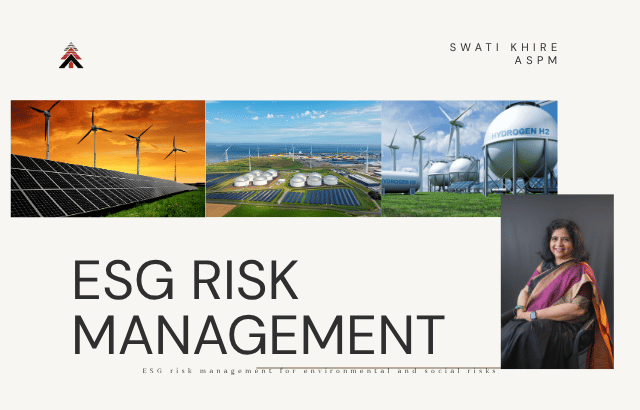
In today’s rapidly evolving business environment, sustainability is no longer just a corporate responsibility initiative—it is an essential part of effective risk management. Businesses across industries face increasing pressure from climate change, resource scarcity, labor practices, human rights concerns, and changing environmental regulations. These challenges can affect financial performance, operational efficiency, brand reputation, and long-term business growth.
This is where ESG risk management plays a critical role. ESG stands for Environmental, Social, and Governance, and it provides a framework for identifying, assessing, and managing risks related to environmental impact, social responsibility, and corporate governance.
By proactively identifying environmental and social risks, organizations can make informed decisions, strengthen stakeholder trust, improve operational resilience, and create long-term value.
In this blog, we will explore what ESG risk management means, why it matters, how businesses can identify environmental and social risks, and practical examples of how organizations can address these challenges.
What Is ESG Risk Management?
ESG risk management is the process of identifying, evaluating, monitoring, and mitigating risks associated with environmental, social, and governance factors that may affect an organization’s operations, financial performance, reputation, and long-term sustainability.
Unlike traditional risk management, which often focuses primarily on financial, operational, and compliance risks, ESG risk management also considers the broader environmental and social consequences of business activities.
The three main components of ESG risk management are:
- Environmental risks: Risks related to climate change, pollution, waste generation, water consumption, biodiversity loss, and energy use.
- Social risks: Risks related to employee health and safety, labor rights, human rights, diversity and inclusion, community relationships, and supply chain working conditions.
- Governance risks: Risks related to business ethics, corruption, transparency, accountability, data security, and board oversight.
Although these categories are interconnected, this blog focuses primarily on identifying environmental and social risks.
Why Is ESG Risk Management Important?
Integrating ESG risk management into business strategy helps organizations anticipate challenges before they become costly problems.
1. Helps Identify Emerging Risks
Environmental and social risks can develop gradually and may not be immediately visible in financial reports. ESG assessments help organizations identify warning signs such as increasing water stress, unsafe working conditions, or unsustainable sourcing practices.
2. Strengthens Regulatory Compliance
Governments and regulators are introducing and expanding sustainability-related requirements in many jurisdictions. Identifying relevant environmental and social risks helps companies prepare for applicable reporting obligations, environmental standards, labor laws, and industry-specific regulations.
3. Protects Brand Reputation
Customers, investors, employees, and business partners increasingly pay attention to how companies manage sustainability issues. Poor environmental practices or labor violations can damage stakeholder trust and lead to negative publicity.
4. Improves Operational Resilience
Climate-related events, resource shortages, and supply chain disruptions can interrupt business operations. Early risk identification allows organizations to develop contingency plans and reduce potential losses.
5. Supports Long-Term Business Value
Managing ESG risks can help businesses use resources more efficiently, strengthen supplier relationships, improve employee retention, and identify opportunities for sustainable innovation.
Understanding Environmental Risks in ESG

Environmental risks arise when business activities, environmental changes, or resource dependencies threaten an organization’s operations, financial stability, or surrounding ecosystems.
These risks can be grouped into several major categories.
1. Climate Change Risks
Climate change creates both physical and transition risks.
- Physical risks: Floods, heatwaves, droughts, wildfires, and severe storms that may damage facilities or disrupt supply chains.
- Transition risks: Financial and operational challenges associated with the shift toward a low-carbon economy, including changing regulations, carbon pricing, new technologies, and evolving customer preferences.
Example: A manufacturing company located in a flood-prone industrial area may experience repeated production interruptions during heavy rainfall. By conducting a climate risk assessment, the company can identify vulnerable facilities, improve drainage systems, elevate critical equipment, and develop emergency response plans.
2. Water Scarcity and Water Pollution
Industries such as textiles, agriculture, food processing, chemicals, and manufacturing may depend heavily on water.
Water-related ESG risks include:
- Limited access to freshwater.
- Excessive groundwater extraction.
- Discharge of untreated wastewater.
- Contamination of nearby rivers and lakes.
- Competition for water resources with local communities.
Example: A textile manufacturing unit operating in a water-stressed region may face production delays because of limited water availability. It may also face regulatory penalties if its wastewater treatment systems fail.
To reduce these risks, the company can introduce water recycling systems, monitor water consumption, treat wastewater, and work with local stakeholders on responsible water management.
3. Pollution and Waste Management
Improper waste disposal and pollution can result in environmental damage, legal liabilities, cleanup costs, and reputational harm.
Common concerns include air emissions, plastic waste, hazardous materials, chemical spills, and inadequate disposal of industrial waste.
Example: A food processing company sends large quantities of organic waste to landfills. This increases disposal costs and may contribute to methane emissions. By separating organic waste and partnering with a suitable composting or biogas facility, the company can reduce landfill dependency and improve resource efficiency.
4. Biodiversity and Land-Use Risks
Business activities such as mining, construction, agriculture, and infrastructure development may affect forests, wetlands, wildlife habitats, and local ecosystems.
Environmental risk identification should consider whether operations or suppliers are located near ecologically sensitive areas and whether business activities could contribute to habitat destruction or ecosystem degradation.
Example: A construction project near a wetland may face delays, additional compliance costs, or community opposition if its development threatens local biodiversity. Conducting an environmental impact assessment and exploring alternative site designs can help identify and reduce these risks early.
5. Energy Consumption and Greenhouse Gas Emissions
High energy consumption can increase operating expenses and expose businesses to energy price volatility and carbon-related transition risks.
Companies can assess their energy use, greenhouse gas emissions, dependence on fossil fuels, and opportunities for energy efficiency.
Example: A company operating multiple warehouses may face rising electricity costs due to inefficient cooling and lighting systems. Installing energy-efficient equipment, optimizing building operations, and evaluating renewable electricity options can reduce energy consumption and associated emissions.
Understanding Social Risks in ESG

Social risks relate to how a company treats employees, customers, suppliers, local communities, and other stakeholders.
These risks can affect productivity, employee retention, business continuity, customer trust, and an organization’s social license to operate.
1. Employee Health and Safety
Unsafe workplaces can lead to injuries, illnesses, legal claims, lost productivity, and operational disruptions.
Common risks include inadequate protective equipment, insufficient training, exposure to hazardous substances, excessive working hours, and poorly maintained machinery.
Example: A manufacturing facility does not provide adequate machine safety training. An employee is injured while operating equipment, leading to a production shutdown and a regulatory investigation.
The organization can reduce this risk by conducting regular safety audits, providing appropriate protective equipment, delivering training, and establishing effective incident reporting procedures.
2. Labor Rights and Working Conditions
Companies may face social risks related to forced labor, child labor, unfair wages, excessive working hours, discrimination, or restrictions on workers’ rights.
These risks may occur within a company’s own operations or further down its supply chain.
Example: A clothing retailer discovers that a supplier requires workers to work excessive overtime without appropriate compensation. The retailer may face reputational damage, contractual disputes, and disruptions to its sourcing arrangements.
A risk-based supplier assessment, worker interviews, confidential grievance mechanisms, and corrective action plans can help identify and address such issues.
3. Human Rights Risks in the Supply Chain
Global supply chains often involve multiple suppliers, subcontractors, and sourcing locations. This complexity can make it difficult to identify human rights violations.
Potential risks include exploitative labor practices, unsafe accommodation, restrictions on freedom of association, and inadequate protection for vulnerable workers.
Example: An electronics manufacturer sources raw materials through several intermediaries. An assessment identifies potential labor rights concerns at an upstream supplier.
The company can map its supply chain, assess high-risk suppliers, request relevant evidence, engage independent assessors where appropriate, and establish a process for remediation.
Simply terminating a supplier may not resolve the underlying harm. The appropriate response should prioritize worker safety, remedy, and responsible business conduct.
4. Community Health and Relationships
Business operations can affect communities through pollution, land acquisition, noise, traffic, resource consumption, and changes to local livelihoods.
Poor communication or failure to address community concerns can lead to protests, project delays, litigation, and loss of trust.
Example: A mining company expands its operations near a village without adequately consulting residents about dust, water use, and land impacts. Community opposition delays the project.
Early stakeholder engagement, transparent impact assessments, accessible grievance mechanisms, and meaningful consultation can help identify concerns and develop appropriate mitigation measures.
5. Diversity, Equity, and Inclusion
Workplace discrimination, unequal opportunities, harassment, and inadequate accessibility can affect employee well-being, organizational culture, and talent retention.
Example: An organization finds that women are significantly underrepresented in leadership positions and that employee surveys indicate concerns about promotion fairness.
The company can review recruitment and promotion practices, investigate reported discrimination, strengthen anti-harassment procedures, and monitor relevant workforce indicators while protecting employee privacy.
6. Customer Safety and Data Privacy
Social responsibility also extends to customers. Unsafe products, misleading claims, inadequate product accessibility, and poor handling of personal data can create significant risks.
Example: A digital services company experiences a data breach because of weak access controls. Customers may lose trust, and the company may face legal and financial consequences.
Regular security assessments, appropriate data protection controls, staff training, and clear incident response procedures can help reduce these risks.
How to Identify Environmental and Social Risks
An effective ESG risk management process should be systematic, evidence-based, and integrated into existing business risk management practices.
Step 1: Understand the Business and Its Value Chain
Begin by examining the organization’s activities, locations, products, suppliers, customers, and resource dependencies.
Consider questions such as:
- Which operations depend heavily on water, energy, or other natural resources?
- Are any facilities exposed to flooding, heat stress, or other climate hazards?
- Which suppliers operate in regions or sectors with elevated labor rights risks?
- Could business activities affect local communities or sensitive ecosystems?
- Which environmental and social issues could materially affect business performance or stakeholders?
This initial assessment helps identify areas that require closer investigation.
Step 2: Conduct an ESG Materiality Assessment
A materiality assessment helps determine which ESG issues are most relevant to an organization.
Depending on the framework and reporting requirements being used, businesses may assess financial materiality, impacts on people and the environment, or both.
For example, water scarcity may create financial and operational risks for a beverage manufacturer while also affecting the surrounding community’s access to water.
The assessment should involve relevant stakeholders and use available evidence rather than relying solely on management assumptions.
Step 3: Collect Relevant Data
Reliable data is essential for identifying ESG risks.
Environmental Data
- Energy consumption and greenhouse gas emissions.
- Water withdrawal, consumption, and discharge.
- Waste generation and disposal methods.
- Environmental incidents and regulatory notices.
- Exposure to climate hazards and ecosystem impacts.
Social Data
- Workplace injuries and safety incidents.
- Employee turnover and absenteeism.
- Working hours and wage compliance.
- Supplier audit findings.
- Grievances, discrimination complaints, and community concerns.
Organizations should establish clear data ownership and verify data quality wherever possible.
Step 4: Engage Stakeholders
Stakeholder engagement provides insights that internal records may not reveal.
Relevant stakeholders may include employees, suppliers, contractors, customers, investors, regulators, local communities, and civil society organizations.
For example, a supplier audit may not reveal that workers fear retaliation for reporting safety issues. Confidential worker interviews and accessible grievance channels may help uncover the problem.
Engagement should be appropriate to the risk, accessible to affected stakeholders, and designed to protect people from retaliation.
Step 5: Assess and Prioritize Risks
Once risks have been identified, businesses should assess their likelihood, severity, potential financial impact, and the extent of harm to people or the environment.
A simple risk matrix can support initial prioritization.
| Risk | Likelihood | Potential Impact | Priority |
|---|---|---|---|
| Water shortage at a production facility | High | High | Critical |
| Supplier labor rights violations | Medium | High | High |
| Inefficient office lighting | High | Low | Moderate |
| Minor, contained waste segregation issue | Low | Low | Low |
Illustrative assessment only. Actual risk ratings depend on the organization’s context, evidence, and assessment methodology.
Importantly, the most severe human rights or environmental impacts should not be deprioritized simply because they are unlikely to create immediate financial losses.
Step 6: Develop Risk Mitigation Plans
After prioritization, assign responsibility for each significant risk and define measurable actions.
A mitigation plan should include:
- The risk and its underlying cause.
- The proposed control or corrective action.
- A responsible owner.
- A target completion date.
- Resources required.
- Performance indicators.
- A process for tracking results and escalating unresolved issues.
Example: If a supplier has inadequate wastewater treatment, the corrective action plan may include an independent assessment, installation or repair of treatment equipment, periodic discharge testing, and verification of compliance.
Step 7: Monitor, Report, and Improve
ESG risks evolve as regulations, technology, climate conditions, and stakeholder expectations change.
Organizations should periodically review risk assessments, investigate incidents, track mitigation progress, and update their priorities.
Useful indicators may include water intensity, greenhouse gas emissions, workplace injury rates, supplier assessment coverage, and the resolution rate for grievances.
Where possible, businesses should measure actual outcomes—not just the number of audits, training sessions, or policies completed.
Practical Example: ESG Risk Management in a Manufacturing Company
Consider a hypothetical manufacturing company that operates a production facility in a water-stressed region and sources raw materials from several suppliers.
An ESG assessment identifies three significant risks:
| Identified Risk | Potential Consequence | Mitigation Strategy |
|---|---|---|
| Excessive water consumption | Production interruptions and community concerns | Water recycling, consumption monitoring, and water-efficiency targets |
| High energy consumption | Rising operating costs and emissions | Energy audits, efficient equipment, and renewable electricity assessment |
| Unsafe supplier working conditions | Worker harm, supply disruption, and reputational damage | Risk-based supplier due diligence, worker engagement, and corrective action plans |
The company assigns owners to each risk, establishes performance indicators, and reviews progress quarterly.
After implementation, it measures water use per unit of production, energy consumption, and supplier corrective action completion. It also checks whether interventions have improved actual workplace safety and environmental performance.
This example demonstrates how ESG risk management can move beyond policy statements and become part of everyday business decision-making.
Best Practices for Effective ESG Risk Management
Businesses can strengthen their approach by following these practices:
- Integrate ESG into enterprise risk management: Connect environmental and social issues with financial, operational, strategic, and compliance risks.
- Use recognized frameworks: Consider relevant guidance such as the GRI Standards, IFRS Sustainability Disclosure Standards, and the OECD Guidelines for Multinational Enterprises on Responsible Business Conduct.
- Focus on significant risks: Prioritize issues based on credible evidence, potential impact, and business context.
- Strengthen supply chain due diligence: Assess suppliers according to risk and maintain processes for corrective action and remediation.
- Assign clear accountability: Ensure senior management and relevant operational teams understand their responsibilities.
- Set measurable targets: Use relevant indicators, baselines, deadlines, and regular progress reviews.
- Engage affected stakeholders: Include the perspectives of workers and communities in risk identification and mitigation.
- Review risks regularly: Update assessments when business operations, suppliers, regulations, or environmental conditions change.
- Avoid unsupported sustainability claims: Ensure ESG disclosures are accurate, transparent, and supported by verifiable information.
Conclusion
ESG risk management is an important part of building responsible, resilient, and sustainable businesses. By identifying environmental risks such as climate change, water scarcity, pollution, and biodiversity loss, organizations can better prepare for operational disruptions and environmental impacts. By identifying social risks such as unsafe working conditions, labor rights violations, human rights concerns, and community conflicts, they can protect stakeholders and strengthen trust.
The most effective approach combines reliable data, stakeholder engagement, risk prioritization, practical mitigation measures, and continual monitoring.
Ultimately, ESG risk management is not just about avoiding negative consequences; it is about making better business decisions while understanding the organization’s impacts on people and the environment.
For organizations seeking long-term success, identifying environmental and social risks early is a practical step toward stronger governance, greater resilience, and more sustainable business performance.
Frequently Asked Questions (FAQs)

1. What is ESG risk management?
ESG risk management is the process of identifying, assessing, monitoring, and mitigating risks related to environmental, social, and governance factors that may affect an organization’s operations, financial performance, reputation, or stakeholders.
2. What are environmental risks in ESG?
Environmental risks include climate change, extreme weather, water scarcity, pollution, waste generation, biodiversity loss, resource depletion, and greenhouse gas emissions. These risks can create operational disruptions, environmental harm, regulatory exposure, and financial losses.
3. What are social risks in ESG?
Social risks relate to the treatment of employees, suppliers, customers, and communities. Examples include workplace injuries, forced labor, child labor, discrimination, human rights violations, unsafe products, data privacy concerns, and community conflicts.
4. What is an example of ESG risk management?
A manufacturing company identifies that its facility is vulnerable to water shortages. It evaluates water consumption, assesses future water availability, installs recycling systems, and monitors water use per unit of production. These actions help manage environmental risks and improve operational resilience.
5. How can companies identify ESG risks?
Companies can identify ESG risks through materiality assessments, environmental and social impact assessments, supplier due diligence, workplace safety audits, stakeholder consultations, climate risk analysis, regulatory reviews, and analysis of operational data.
6. What is the difference between ESG risk management and sustainability management?
ESG risk management focuses on identifying and managing risks associated with environmental, social, and governance issues. Sustainability management is broader and also includes setting sustainability goals, improving environmental and social performance, developing responsible products, and creating long-term positive outcomes.
7. Which industries face significant environmental and social ESG risks?
Industries such as manufacturing, mining, energy, agriculture, construction, textiles, chemicals, transportation, and food processing may face substantial ESG risks. The specific risks depend on operational activities, geographic location, resource dependencies, and supply chain exposure.
8. What tools can businesses use for ESG risk assessment?
Businesses may use ESG risk matrices, climate scenario analysis, environmental impact assessments, supplier risk assessments, stakeholder surveys, sustainability data platforms, and internal audit tools. Relevant frameworks and standards can help structure assessments and disclosures.
9. How can companies prioritize ESG risks?
Companies can prioritize risks by assessing the likelihood of an event, its potential financial consequences, the severity of impacts on people and the environment, the scale and scope of those impacts, and the difficulty of remedying harm. Prioritization should reflect the assessment framework and the organization’s specific circumstances.
10. What are the key ESG risk management frameworks?
Relevant frameworks and guidance include the Global Reporting Initiative (GRI) Standards, IFRS Sustainability Disclosure Standards, the Task Force on Climate-related Financial Disclosures (TCFD) recommendations, and the OECD Guidelines for Multinational Enterprises on Responsible Business Conduct. Organizations should select the frameworks appropriate to their reporting needs, jurisdiction, and industry.
11. How often should ESG risks be assessed?
ESG risks should be reviewed periodically, often annually as part of a formal assessment, and whenever significant changes occur. Major acquisitions, new suppliers, regulatory changes, environmental incidents, extreme weather events, or serious stakeholder complaints may require an earlier review.
12. What are the benefits of identifying environmental and social risks early?
Early identification can help prevent operational disruptions, reduce environmental harm, improve worker safety, strengthen supplier relationships, support regulatory compliance, protect reputation, and improve long-term business resilience.
13. How does ESG risk management support business growth?
Effective ESG risk management helps businesses anticipate disruptions, improve resource efficiency, build stakeholder trust, strengthen supply chain resilience, and identify opportunities for innovation. It can support sustainable growth when integrated into business strategy and supported by measurable results.
14. What is the first step in implementing ESG risk management?
The first step is to understand the organization’s activities, value chain, environmental dependencies, stakeholder relationships, and applicable requirements. This creates a foundation for identifying material ESG issues and developing a structured risk assessment.