A management-system certificate can demonstrate that an organisation has met the requirements of a recognised standard.
But certification alone does not answer a more important question:
Is the management system actually improving business performance?
An organisation can have documented procedures, conduct internal audits and successfully complete certification audits while still experiencing recurring quality problems, operational inefficiencies, customer complaints and unnecessary risks.
The difference lies in effectiveness.
Here are seven signs that your management system may not be delivering the value your organisation expects.
1. The Same Problems Keep Coming Back
Recurring problems are one of the clearest warning signs.
If the organisation repeatedly encounters the same:
- Customer complaints
- Product defects
- Process failures
- Supplier issues
- Safety incidents
- Audit findings
then corrective action may not be addressing the true root cause.
A mature management system should help the organisation learn from problems and prevent recurrence.
2. Employees See the System as “Paperwork”
Ask employees what they think about the management system.
If the common response is:
“It is only for audits.”
there may be a serious disconnect.
A management system should support employees in doing their work consistently and effectively.
Procedures, checklists and records should have a clear purpose.
3. Internal Audits Focus on Documents Instead of Performance
An audit can confirm that a procedure exists.
But the more important question is whether the process is achieving its intended results.
For example, an audit of purchasing should not stop at checking whether supplier evaluation records exist.
It should also consider:
- Supplier quality
- Delivery performance
- Recurring supplier problems
- Risk controls
- Corrective-action effectiveness
This shifts the audit from compliance checking to performance evaluation.
4. Management Reviews Do Not Lead to Decisions
Management review meetings should provide leadership with useful information.
If meetings consist mainly of presenting slides and completing formal requirements, the opportunity for improvement is being missed.
Effective reviews should help leadership identify:
- Emerging risks
- Poor performance
- Resource requirements
- Customer issues
- Improvement opportunities
- Strategic priorities
Most importantly, they should result in decisions and actions.
5. Your Metrics Are Not Connected to Business Objectives
A management system can generate dozens of KPIs.
But more metrics do not automatically create better performance.
The important question is:
Which metrics help management make better decisions?
For example, a manufacturing organisation may track:
- First-pass yield
- Rework
- Scrap
- Customer complaints
- On-time delivery
- Process cycle time
These measures become more valuable when connected to business objectives such as cost reduction, customer retention and productivity.
6. Corrective Actions Are Closed but Problems Continue
A corrective action marked “closed” does not necessarily mean the problem has been solved.
Organisations should consider whether the action:
- Addressed the root cause
- Was implemented effectively
- Prevented recurrence
- Produced measurable improvement
Effectiveness should be verified after implementation.
7. Improvement Depends on One Person
If the entire management system depends on one quality manager, safety officer or management representative, the system may not be embedded within the organisation.
Management systems work best when responsibility is distributed across process owners and leadership.
Employees should understand:
- Their responsibilities
- Relevant risks
- Process requirements
- Performance expectations
- Opportunities for improvement
How to Move From Compliance to Performance
The solution is not necessarily to create more procedures.
Instead, organisations should focus on connecting their management system with actual business priorities.
Consider these five questions:
1. What are our most important business objectives?
Start with strategy.
2. Which processes influence those objectives?
Identify the critical processes.
3. What risks could prevent success?
Use risk-based thinking.
4. Which performance measures show whether we are succeeding?
Choose meaningful KPIs.
5. What improvements should we prioritise?
Use data and evidence to guide decisions.
A Management System Should Support Leadership
A strong management system provides leadership with visibility.
It should help answer:
- Are we meeting our objectives?
- Are customers satisfied?
- Where are our biggest operational risks?
- Are our processes effective?
- Are resources being used efficiently?
- Are improvement actions working?
- Where should we invest next?
If the management system cannot answer these questions, it may need to be redesigned or strengthened.
From Certification to Organisational Capability
The ultimate objective of a management system should be stronger organisational capability.
Certification can provide an external benchmark.
But sustainable performance comes from:
Effective processes + capable people + informed leadership + risk management + continual improvement
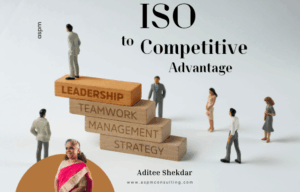
This is where management systems can become a competitive advantage.
How ASPM Consulting Can Help
ASPM Consulting helps organisations assess and improve management systems, operational performance, risk management and organisational capability.
If your organisation has an ISO-certified management system but is not seeing the expected business benefits, an independent assessment can help identify gaps between compliance and effectiveness.
Your management system should not simply prove that your organisation has processes. It should help your organisation perform better.