At 8:15 on a Monday morning, the Managing Director of a growing manufacturing company looked at the numbers on the screen.
Revenue was up 18%.
The order book was stronger than it had been in years.
The sales team was celebrating.
But the Managing Director had one question:
“If we are growing so well, why isn’t the bottom line growing with us?”
The answer was not a lack of demand.
It was not a lack of capable people.
And it certainly was not a lack of effort.
The business had simply become more expensive and complicated to run as it grew.
Extra approvals were slowing decisions. Teams were spending more time coordinating than delivering. Capacity was available in some areas but constrained in others. Customer commitments required increasing levels of effort.
Growth was happening—but productivity and efficiency were not keeping pace.
This is a situation many CEOs and Managing Directors eventually face.
The real challenge is not simply growing the business. It is growing profitably, productively, and efficiently enough to create a lasting competitive advantage.
That is where ASPM Consulting comes in.
We work with leadership teams to connect operational performance directly to business performance—helping organizations identify where profitability is being lost, where productivity can improve, where efficiency is holding back growth, and where better operating performance can create competitive advantage.
The Business Problem Behind the Numbers
A CEO rarely wakes up thinking:
“We need a better operating methodology.”
The questions are usually much more commercial:
- Why are our costs increasing faster than revenue?
- Why do we need more people to support the same level of growth?
- Why is productivity not improving despite higher investment?
- Why are customers waiting longer?
- Why does growth create more complexity instead of more profit?
- Why are competitors delivering faster or at lower cost?
These are boardroom questions.
And they require boardroom answers.
At ASPM Consulting, our starting point is therefore not a training program or a technical exercise.
We start with the economics of the business.
Where is profitability being lost?
Where is productivity being constrained?
Where is efficiency being diluted?
What is preventing profitable growth?
And what can create a sustainable competitive advantage?
1. Profitability: Growth Must Improve the Bottom Line
Consider a company generating:
- Revenue: ₹100 crore
- Operating cost: ₹85 crore
- Operating profit: ₹15 crore
Now imagine revenue increases by 10%.
Revenue becomes ₹110 crore.
If costs rise by 10% as well, operating costs become ₹93.5 crore.
Operating profit becomes:
₹110 crore − ₹93.5 crore = ₹16.5 crore
Revenue increased by ₹10 crore, but profit increased by only ₹1.5 crore.
That means the company has worked significantly harder to generate relatively little additional profit.
Now consider a different outcome.
If the same company improves productivity and efficiency enough to limit the additional operating cost to ₹4 crore:
₹110 crore − ₹89 crore = ₹21 crore profit
The same 10% revenue growth has now produced a ₹6 crore increase in profit instead of ₹1.5 crore.
The lesson for leadership
Growth alone does not create value.
Profitable growth does.
ASPM Consulting helps leadership teams identify the operational factors that have the greatest financial impact and prioritize improvements around measurable business outcomes.
The conversation changes from:
“How do we improve operations?”
to:
“Which operational improvements will have the greatest impact on profit?”
2. Productivity: Getting More Business From the Same Resources
Productivity is not about asking employees to work harder.
It is about increasing the value created from the resources the organization already has.
Imagine a service organization with 50 employees processing 100,000 customer transactions per year.
That means:
100,000 ÷ 50 = 2,000 transactions per employee
If better processes, clearer responsibilities, faster decisions, and improved coordination allow the same 50 employees to handle 120,000 transactions:
120,000 ÷ 50 = 2,400 transactions per employee
Productivity has increased by:
(2,400 − 2,000) ÷ 2,000 × 100 = 20%
The organization has gained 20% more capacity without simply adding 20% more people.
That creates options for management.
The additional capacity could support:
- More customers
- Faster growth
- Better service
- Higher profitability
- New market opportunities
This is why productivity is fundamentally a growth issue.
ASPM Consulting’s perspective
We help leadership teams look beyond individual employee performance and examine how the organization itself enables or restricts productivity.
Often, the problem is not that people are inefficient.
The problem is that the system around them makes productive work unnecessarily difficult.
3. Efficiency: Remove the Cost of Complexity
Imagine a customer order that should take three days to complete.
Instead, it takes eight days.
The actual work may still require only three days.
The remaining five days are created by waiting, handoffs, clarification, approvals, scheduling issues, rework, or competing priorities.
From a customer’s perspective, however, the order took eight days.
That difference matters.
Every additional day can affect:
- Customer satisfaction
- Working capital
- Capacity
- Delivery reliability
- Employee productivity
- Cost
A business does not become efficient simply because every department is busy.
Efficiency comes from how effectively the entire organization converts resources into customer and business value.
ASPM Consulting works with leadership teams to identify where time, capacity, money, and management attention are being consumed without producing proportional business value.
The objective is simple:
Make the business easier, faster, and more economical to operate.
4. Growth: Build Capacity Before Growth Exposes the Weaknesses
A company wins a major new contract.
The sales team celebrates.
Then reality arrives.
Production needs additional capacity. Procurement struggles to respond. Finance has more transactions. Customer service receives more calls. Managers spend more time solving operational issues.
Revenue grows—but organizational complexity grows faster.
This is a common growth trap.
A company can reach a point where every additional ₹1 crore of revenue requires disproportionately more people, coordination, supervision, and operating cost.
The result?
Growth starts consuming profitability instead of creating it.
ASPM Consulting helps leadership teams prepare operations for growth by asking an important question:
“If revenue increased by 30%, could the organization absorb it without costs and complexity increasing at the same rate?”
That question often reveals the real growth constraint.
5. Competitive Advantage: Speed and Efficiency Become Strategic Assets
Imagine two companies competing for the same customer.
Company A:
- Delivers in 10 days
- Requires multiple internal approvals
- Has high operating costs
- Struggles with unpredictable demand
Company B:
- Delivers in 5 days
- Makes decisions faster
- Uses capacity more effectively
- Maintains stronger cost control
Even if both companies offer similar products, Company B has a strategic advantage.
It can potentially:
- Respond faster
- Compete more effectively on price
- Serve more customers
- Protect margins
- Scale more efficiently
Operational performance therefore becomes more than an internal management issue.
It becomes a competitive weapon.
ASPM Consulting helps organizations turn operational performance into an advantage that customers can see and competitors find difficult to replicate.
A Simple Leadership Framework
For CEOs and Managing Directors, operational improvement can be viewed through five questions:
| Business Priority | Leadership Question |
|---|---|
| Profitability | Where are we losing margin? |
| Productivity | Are we getting enough output from our resources? |
| Efficiency | Where are time and capacity being consumed unnecessarily? |
| Growth | Can we grow without costs rising at the same rate? |
| Competitive Advantage | What can we do faster, better, or more economically than competitors? |
This creates a much more useful management conversation.
Instead of asking:
“What improvement initiatives should we launch?”
Ask:
“Which business constraint is limiting our financial performance?”
A Practical Example: The ₹50 Crore Opportunity
Consider a hypothetical business with annual revenue of ₹200 crore and operating costs of ₹170 crore.
Current operating profit:
₹200 crore − ₹170 crore = ₹30 crore
Now assume leadership identifies opportunities that collectively reduce avoidable operating costs and increase productive capacity by the equivalent of 5% of operating cost.
Potential improvement:
₹170 crore × 5% = ₹8.5 crore
If that improvement flows through to operating profit:
₹30 crore + ₹8.5 crore = ₹38.5 crore
That represents a:
₹8.5 crore increase in operating profit
or approximately:
28.3% improvement in operating profit
without requiring 28.3% revenue growth.
This is why improving the way a business operates can have an outsized impact on financial performance.
The numbers will differ from company to company, but the principle remains:
Small improvements in operating performance can create disproportionately large improvements in profitability.
What ASPM Consulting Brings to the Boardroom
ASPM Consulting’s role is not to introduce another initiative for management teams to administer.
Our role is to help leadership answer five practical questions:
1. Where is profitability being lost?
We identify the operational factors that are putting pressure on margins and prioritize opportunities based on financial impact.
2. Where is productivity being constrained?
We examine how people, capacity, information, decisions, and resources are being used—and where the organization can generate more output from what it already has.
3. Where is efficiency being diluted?
We look for unnecessary complexity, delays, duplication, and activities that consume resources without creating proportional value.
4. What is limiting growth?
We identify the organizational constraints that could prevent the business from scaling efficiently.
5. Where can performance create competitive advantage?
We connect operational capability with what customers value: speed, reliability, cost, responsiveness, and consistent performance.
The objective is measurable business improvement—not activity for activity’s sake.
From Operational Problems to Business Results
A useful way to think about the journey is:
Business Challenge → Root Cause → Improvement Opportunity → Financial Impact → Sustainable Result
For example:
High operating cost
↓
Too much time spent on non-value-creating activity
↓
Improve how work is organized and managed
↓
Increase productive capacity and reduce operating cost
↓
Higher profitability
Or:
Customer growth is slowing
↓
Delivery takes too long
↓
Improve coordination and decision speed
↓
Faster customer response
↓
Higher growth and competitive advantage
The important point is that operational improvement should always connect back to a business result.
What Should a CEO Measure?
A leadership dashboard does not need dozens of metrics.
A focused set can be more powerful.
For example:
Profitability
Operating profit = Revenue − Operating Cost
Productivity
Output per employee = Total Output ÷ Number of Employees
Efficiency
Efficiency = Useful Output ÷ Resources Used
Growth
Growth Rate = (Current Revenue − Previous Revenue) ÷ Previous Revenue × 100
Competitive Advantage
Consider measures such as:
- Customer response time
- Delivery speed
- Cost competitiveness
- Capacity available for growth
- Customer retention
The purpose is not to create more reports.
It is to make performance visible enough for leadership to act.
The CEO’s Real Question
The most important question may not be:
“How can we improve our operations?”
It may be:
“How much more profitable could this business become if it operated at its full potential?”
That question changes the conversation.
It moves improvement away from the factory floor, the operations department, or an isolated project.
It puts operational performance where it belongs:
on the leadership agenda.
For ASPM Consulting, that is the starting point.
We believe organizations should not have to choose between growth and profitability, between productivity and employee capability, or between efficiency and customer experience.
The goal is to build an organization capable of doing all of them better—consistently and at scale.
Because the strongest competitive advantage is not simply having a better product.
It is having a business that can consistently deliver better performance, at a better cost, with greater speed, while continuing to grow.
Frequently Asked Questions
1. Is this mainly about reducing costs?
No.
Cost reduction can be one outcome, but the broader objective is stronger business performance.
ASPM Consulting looks at profitability, productivity, efficiency, growth, and competitive advantage together. Cutting costs without improving the underlying business can damage growth or customer experience.
The objective is better economics, not simply lower spending.
2. Does improving productivity mean reducing employees?
Not necessarily.
In many businesses, the first opportunity is to create more productive capacity from the existing workforce.
If the organization can handle more business with the same resources, that capacity can support growth, improve customer service, or increase profitability.
The question is:
How much more value can the organization create from its existing resources?
3. Is this relevant only to manufacturing companies?
No.
The same business principles apply to manufacturing, healthcare, financial services, logistics, retail, technology, professional services, and other sectors.
Wherever an organization has customers, people, resources, decisions, costs, and growth ambitions, productivity and efficiency influence profitability.
4. How quickly can results be seen?
It depends on the business challenge.
Some opportunities can produce measurable results within weeks. Others require broader changes and sustained management attention.
ASPM Consulting focuses first on opportunities where the business impact is clear and measurable, rather than pursuing improvement for its own sake.
5. How do we know whether an improvement is worth pursuing?
A simple test is:
Expected annual business benefit ÷ Required investment
For example, if an initiative requires ₹50 lakh and is expected to generate ₹2 crore of annual benefit:
₹2 crore ÷ ₹50 lakh = 4×
That gives leadership a straightforward basis for prioritization.
6. What makes ASPM Consulting different from a traditional training provider?
The focus is different.
Training typically focuses on transferring knowledge.
ASPM Consulting focuses on business performance.
The starting point is the organization’s commercial challenge—profitability, productivity, efficiency, growth, or competitive advantage—and the improvement effort is connected to measurable outcomes.
The Bottom Line
Every organization has a gap between what it is capable of achieving and what it currently delivers.
For some businesses, that gap appears as declining margins.
For others, it appears as slow growth, rising costs, low productivity, inefficient operations, or competitors moving faster.
The opportunity is to close that gap.
ASPM Consulting helps leadership teams turn operational performance into measurable business performance—with a clear focus on profitability, productivity, efficiency, growth, and competitive advantage.
Because the ultimate measure of a high-performing organization is not how many improvement initiatives it completes.
It is how much more profitable, productive, efficient, scalable, and competitive the business becomes.
About the Author
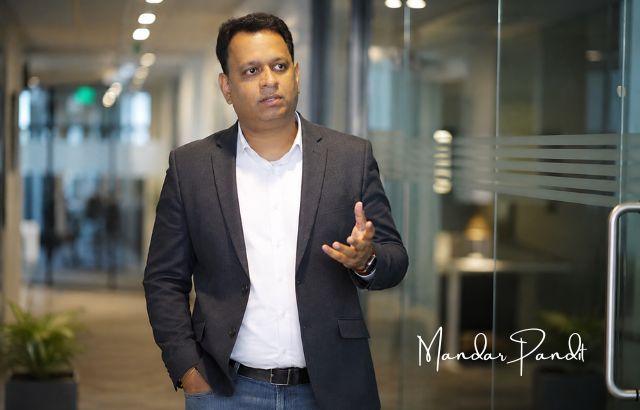
Mandar Pandit
Founder & Director | Business Excellence & Transformation Advisor
Mandar Pandit is a business excellence advisor and transformation leader with more than three decades of experience helping organizations improve how they operate, compete, and grow.
As Founder & Director of ASPM Consulting, Mandar works with business leaders to address the challenges that sit at the heart of organizational performance—profitability, productivity, efficiency, growth, resilience, and competitive advantage.
His perspective goes beyond improving individual processes. He looks at the organization as a complete business system: how decisions are made, how resources are deployed, how performance is measured, where value is created or lost, and how leadership can build an organization capable of sustaining performance as it grows.
Over the course of his career, Mandar has worked across operational excellence, quality management, governance, risk, process improvement, and organizational transformation. This experience has given him a practical understanding of how operational decisions influence financial performance and long-term competitiveness.
His work brings together operational discipline and strategic foresight—helping leadership teams anticipate risks, strengthen organizational capability, improve efficiency, and create the foundations for sustainable growth.
Mandar believes that business excellence is not about implementing more systems or creating more initiatives.
It is about building a business that can perform better, respond faster, operate more efficiently, manage risk intelligently, and create greater value for customers and stakeholders.
Today, through ASPM Consulting, he continues to work with organizations and leadership teams that want to move beyond incremental improvement and build more profitable, productive, resilient, and competitive enterprises.